The David Style
March 2, 2025 § Leave a comment

I decided to read David Rakoff’s Fraud, which had been sitting on my shelf for a while. I had bought it used and remembered there being a lot of hype surrounding the book when it came out, I think because Rakoff was viewed as an heir apparent of sorts to David Sedaris. Like Sedaris, he had a number of essays featured on This American Life. Some of the essays in Fraud were featured on the show, and have the indicators of TAL material—immersive experiences, some interviews, all interjected with light, wry humor.
As I read it, though, I was thinking of the essays of David Foster Wallace—the kind of assignment journalism he attempts in A Supposedly Fun Thing I’ll Never Do Again. (I’m thinking of Wallace’s pieces on the Illinois State Fair and the cruise ship excursion, to be specific.) These essays are fun and entertaining reads, but they carry a bit of a haughty, somewhat hostile Gen X attitude, through the lens of someone who can’t believe the people around him are taking themselves seriously and having a good time. It carries the insinuation that we, the reader, would never stoop to participating in such activities ourselves.
The essays in Fraud tackle similar “you had to be there”-style assignments: Rakoff’s time at a New Age retreat center, his attendance at a wilderness & survival school in New Jersey, an orientation session for teachers from Austria for positions in the New York City public school system. Rakoff’s writing is less intentional in its aim, less hostile, a little more sincere and curious, but it often still leaves its subject hanging out to dry while we are supposed to share the author’s perplexity. I have not listened to This American Life in a long while, so maybe I’m wrong in assuming this, but this approach to essay writing strikes me as belonging to an era that has passed—writing with less of a sense of elevation and more about using subjects as marks to showcase wit. Given the shared first names of these three notable examples, I’m inclined to think of this as the David Style.
Rakoff died in 2012 from complications at the very young age of forty-seven. The final essay in Fraud obliquely refers to his diagnosis of Hodgkin’s lymphoma. (I thought of Janet Hobhouse having her ovarian tumor discovered at the end of The Furies.)It’s one of Rakoff’s few personal pieces in the book, though it strives to be about something other than himself.
How Dogs and Aliens Think
October 28, 2024 § Leave a comment
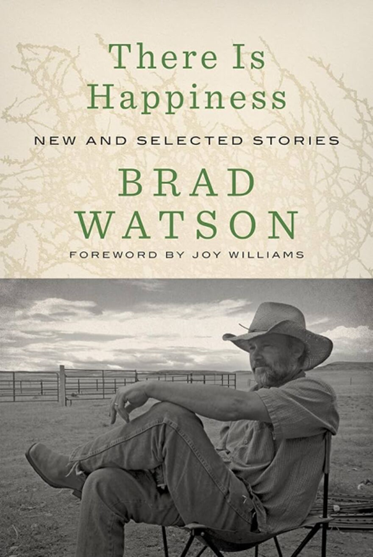
Brad Watson died in 2020 at the age of 64, the same age as one of my favorite short story writers, Frederick Busch. I hadn’t really known Watson’s work at the time, but other writers celebrated both his stories and the human who wrote them. He wrote two novels, Miss Jane and The Heaven of Mercury (the latter a finalist for the National Book Award), and two collections, Last Days of the Dog-Men and Aliens in the Prime of Their Lives. I was never able to find them in any bookstore I visited.
There’s now a posthumous collection available, There Is Happiness, published by W. W. Norton & Co., with a foreword by Joy Williams. It contains both of the title stories from Last Days and Aliens. Many of the stories have a Southern flavor (Watson was born in Mississippi) but are not as yarny as Barry Hannah’s or sentimental as Truman Capote’s; they are often humorous but not reductively so, weighted with sincerity even as they veer into the strange. Characters wear their flaws and get bruised from fights and embarrassment but persist in their efforts to strive upward. Just as with any Joy Williams collection, there are a good number of dogs, some with quirkier personalities than their humans, such as the dog in “Terrible Argument,” who is an unwilling witness to the combative relationship between a nameless couple. The dog gradually becomes the story’s motor:
The man and woman came by one day and took her home, and were kind to her, but almost immediately the daily loud barking and snarling started up, and even if she could usually tell when it was about to start she was always frightened and wanted to run away. Now here she was beneath the coffee table, licking her paws, with their leash fastened to the collar about her neck, and nowhere to go. No walk. No drive up into the mountains to chase squirrels. No quick trip to the prairie to jump jackrabbits, harass the cowardly pronghorn herd. She could rip open the back screen, jump the fence, and walk until another man or woman or couple saw the leash and took it up. She could offer herself to someone else this way, take her chances.
Williams was good friends with Watson, and after his death she wrote about driving up to his Wyoming ranch to mourn with his wife, Nell. Around this same time, I got to see a video recording of Watson giving an incredible lecture at Bread Loaf that discusses a story by Williams, “The Farm,” as an example of a writer using craft as a way to unlock potentialities and recognize a story’s natural force.
Maybe the reason I had trouble finding his books is that I live too far north. But I was glad that There Is Happiness gave me a chance to experience the work of this thoughtful writer.
 Neil Serven